Trans Sales Tax Wp Banner

On April 7, 2026, Marshall voters will decide on a half-cent sales tax dedicated to street and sidewalk maintenance. This page provides educational information to help you make an informed decision.
Copy Of Trans Sales Tax Wp Banner (1)

What’s on the Ballot?

Ballot Question: Shall the City of Marshall, Missouri, impose a sales tax of one-half of one percent (1/2%) for transportation purposes, limited to a three-year period, for the construction, reconstruction, repair, and maintenance of streets, roads and sidewalks?”

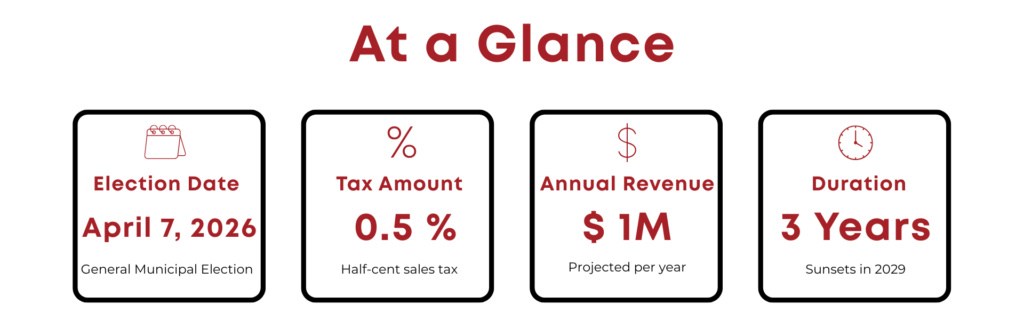
In Plain Language: This measure would add a half-cent to the sales tax on retail purchases in Marshall, with all revenue dedicated exclusively to transportation infrastructure including streets, sidewalks, and related improvements. The tax would automatically sunset after three years in 2029 at which time it would be up to the voters to approve again.

The Basics

A half-cent sales tax means 50¢ for every $100 spent. Here’s what that looks like in everyday purchases:

  • 2¢ cents on your $4 morning coffee
  • 20¢ cents on $40 to fill up your gas tank
  • 25¢ cents on $50 worth of groceries

The tax applies to all retail purchases in Marshall, including purchases made by visitors. This means people who live outside Marshall but shop here also contribute to maintaining our streets.

Based on prior years sales tax revenue it is anticipated that a half-cent sales tax will generate around $1 million dollars per year.

By law, revenue can only be used for transportation infrastructure:

  • Street repairs and reconstruction
  • Sidewalk improvements and ADA accessibility
  • Traffic safety enhancements

FAQs

If approved by voters on April 7, 2026, the tax would take effect shortly after and automatically sunset after three years in 2029. At that point, voters would need to approve it again if the city wanted to continue the tax.

Without dedicated funding, Marshall will return to emergency only repairs. Streets will deteriorate without regular maintenance, eventually requiring expensive full reconstruction.

No. By law, revenue from this tax can only be used for transportation infrastructure. This includes streets, sidewalks, traffic safety improvements, and related maintenance. The city cannot use this money for any purpose other than transportation related expenses.

Belt tightening in this case means re-allocating revenue from the city’s general fund. The general fund covers essential services like police, fire, facility maintenance, and basic administrative functions.

The truth is that the general fund simply cannot bear the cost of a $1 million dollar per year streets and sidewalks program without some very tough decisions about what other essential services would have to be reduced or eliminated.

A dedicated transportation sales tax allows the city to avoid this impossible choice. Streets get consistent funding without cutting services that residents depend on daily.

Sales tax distributes the cost more broadly because visitors and non-residents who shop in Marshall also contribute. This means Marshall residents don’t bear the full cost alone.

Revenue can only be used for transportation purposes by law. The city will provide regular public reporting on how funds are used. Additionally, because the tax sunsets after three years, voters will have the opportunity to review the city’s performance before deciding whether to renew it in 2029.

The city uses pavement condition assessments, traffic volume data, and safety considerations to prioritize street maintenance. The goal is to address streets before they require expensive full reconstruction, maximizing the value of every dollar invested.

Documents & Resources

The street maintenance projects shown below represent the City’s current plans for how transportation sales tax funds would be used over the next three years if the tax is approved by voters on April 7. This list reflects our best assessment of Marshall’s street needs today and is intended to give residents a clear picture of where we plan to invest these dollars. However, this is not a binding commitment, street conditions change, costs fluctuate, and unexpected repairs come up. A water main break, a harsh winter, or shifts in material and labor costs can all affect what gets done and when. We will use this list as our roadmap, but we’ll adjust it as real world conditions require, and the City Council will have final approval over how funds are spent on street and sidewalk maintenance.

2026-2029 Street Maintenance Plans